
What is Zinc Magnesium Coating?
Zinc Magnesium coating is one of the biggest advancements in steel corrosion protection in decades. Created using a mixture of zinc, aluminium and magnesium, this next-generation coating technology significantly outperforms traditional galvanised steel in Australia’s harsh environments.
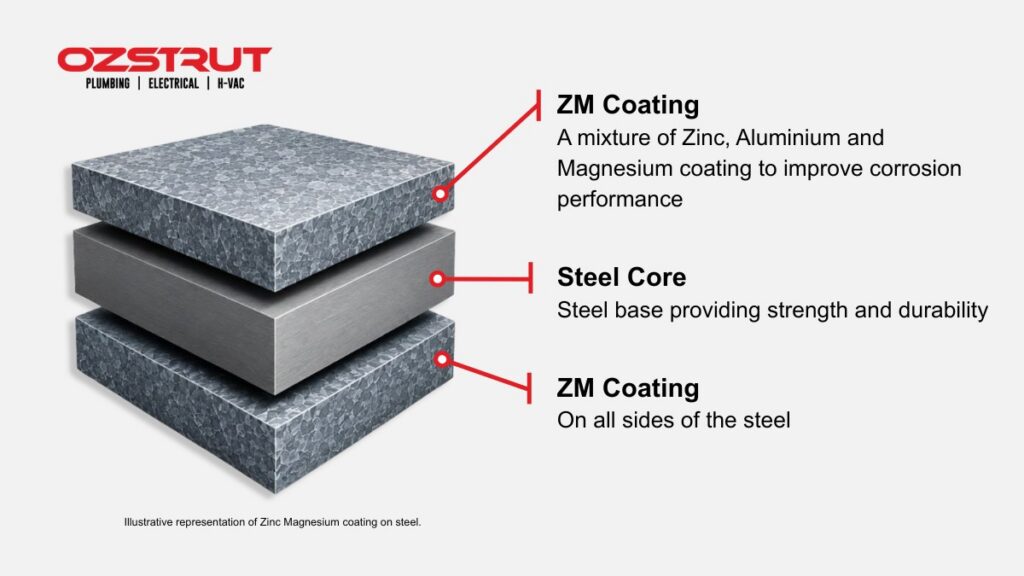
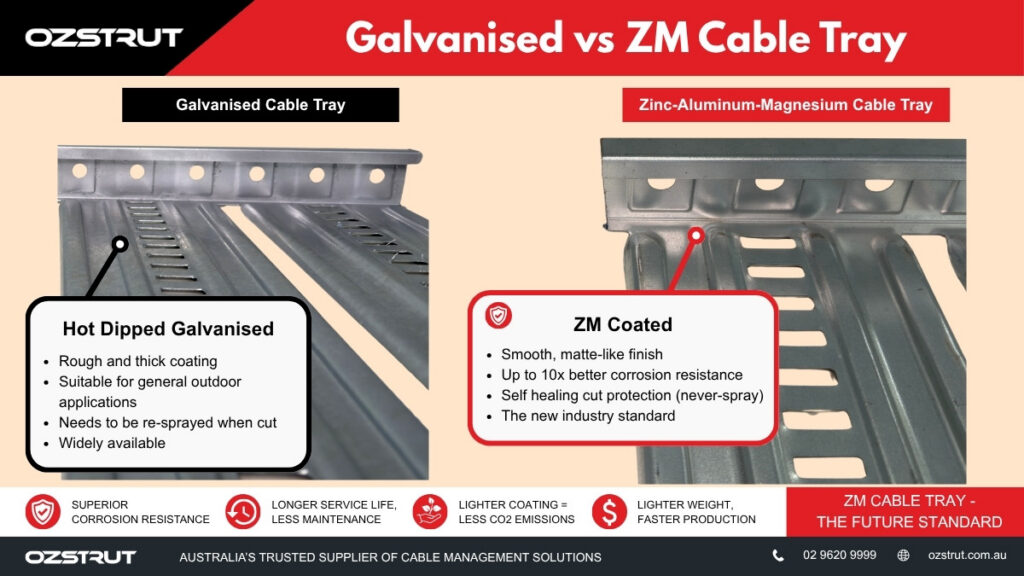
The Zinc Magnesium (ZM) Coating can provide 3 to 10 times better corrosion protection than traditional galvanising methods, and even has self healing properties when scratched or cut. Eliminating the need to re-spray unprotected edges.
The Zinc Magnesium coating offers:
- Stronger corrosion performance in a range of harsh climates
- Longer product lifespan and less maintenance over time
- Self healing protection on scratches and cuts
- Lower CO2 emissions in production
- A faster production process
- A lightweight, matte-like finish
ZM coating offers the above benefits when compared to hot dip galvanising protection of steel products.
Zinc Aluminium Magnesium Coating Explained:
The reason that ZM coating perfoms better than traditional galvanised materials is the addition of magnesium to the coating technology. A ZM coating formula is typically made up of:
- 93.5% Zinc
- 3.5% Aluminium
- 3% Magnesium
This ArcelorMittal video explains how their Zinc-Aluminium-Magnesium coating technology works:
The video above demonstrates ArcelorMittal’s Zinc-Aluminium-Magnesium coating technology, which can differ from other company’s formuals and applications.
The Australian construction industry is increasingly adopting Zinc Magnesium Aluminium (ZM) coatings as an alternative to galvanised and hot-dip galvanised finishes, due to the following benefits:
Why ZM Coating is Better Than Galvanising
Stronger Corrosion Protection
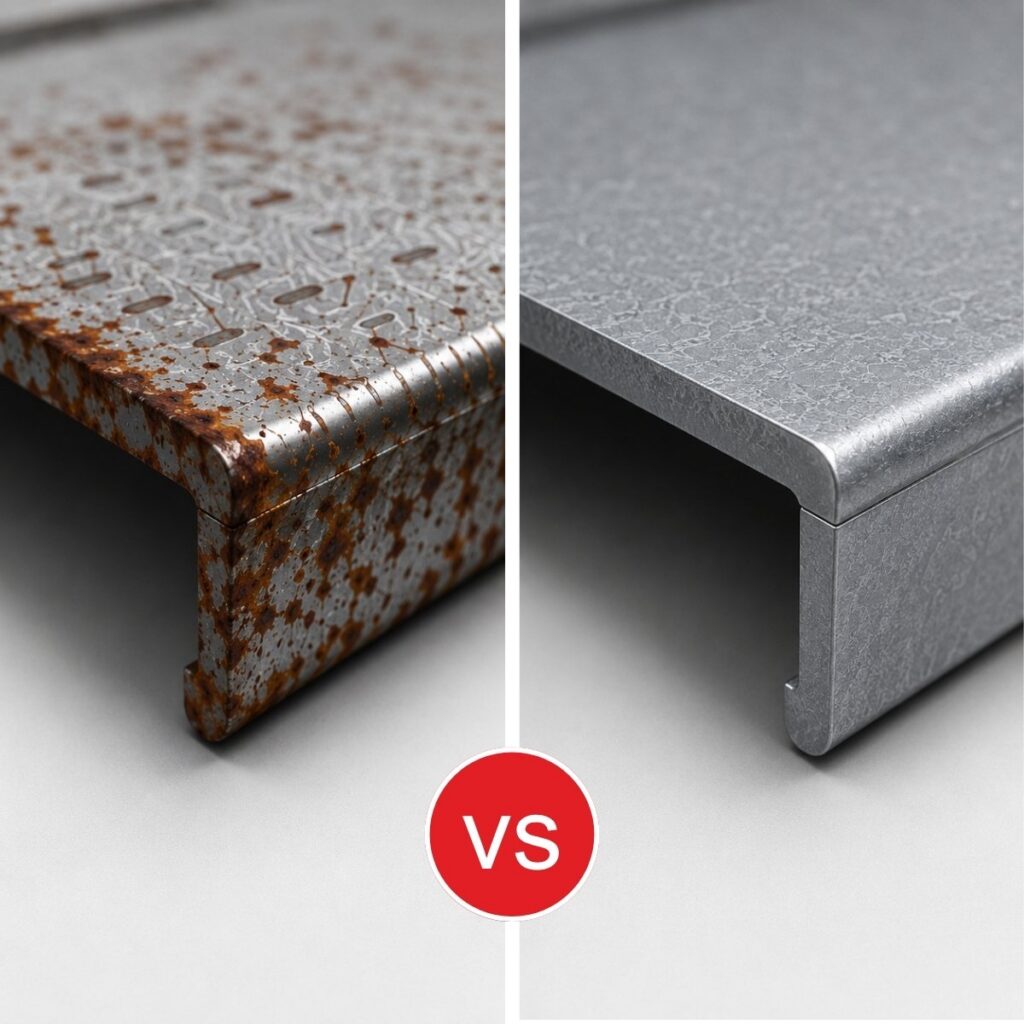
ZM coating has more than 3 times greater corrosion resistance than traditional hot dip galvanised steel in standard environments. In harsher conditions, such as climates containing ammonia, chloride, moisture or soil – ZM coatings can perform up to 10 times better than traditional galvanised systems.
This is why ZM coatings are approved in C5 environments, with some ZM coating systems providing superior corrosion restistance in the equivilant of over 30 years in the harshest conditions.
Self Healing Cut Protection
The addition of magnesium in the coating allows the surface to actively self-heal its protective layer when scratched or cut, helping to prevent corrosion before it spreads.
When the coating is cut/scratched – exposing bare steel, the magnesium and aluminium compounds react with water and oxygen to slowly ooze back over the exposed steel. The protective coating then sets again, covering any rust and slows down the corresion much faster than hot dip gal protection. This also means there is no need to re-spray the metal after cutting it to size or if you accidentally scratch it.

Reduced Lifecycle Cost
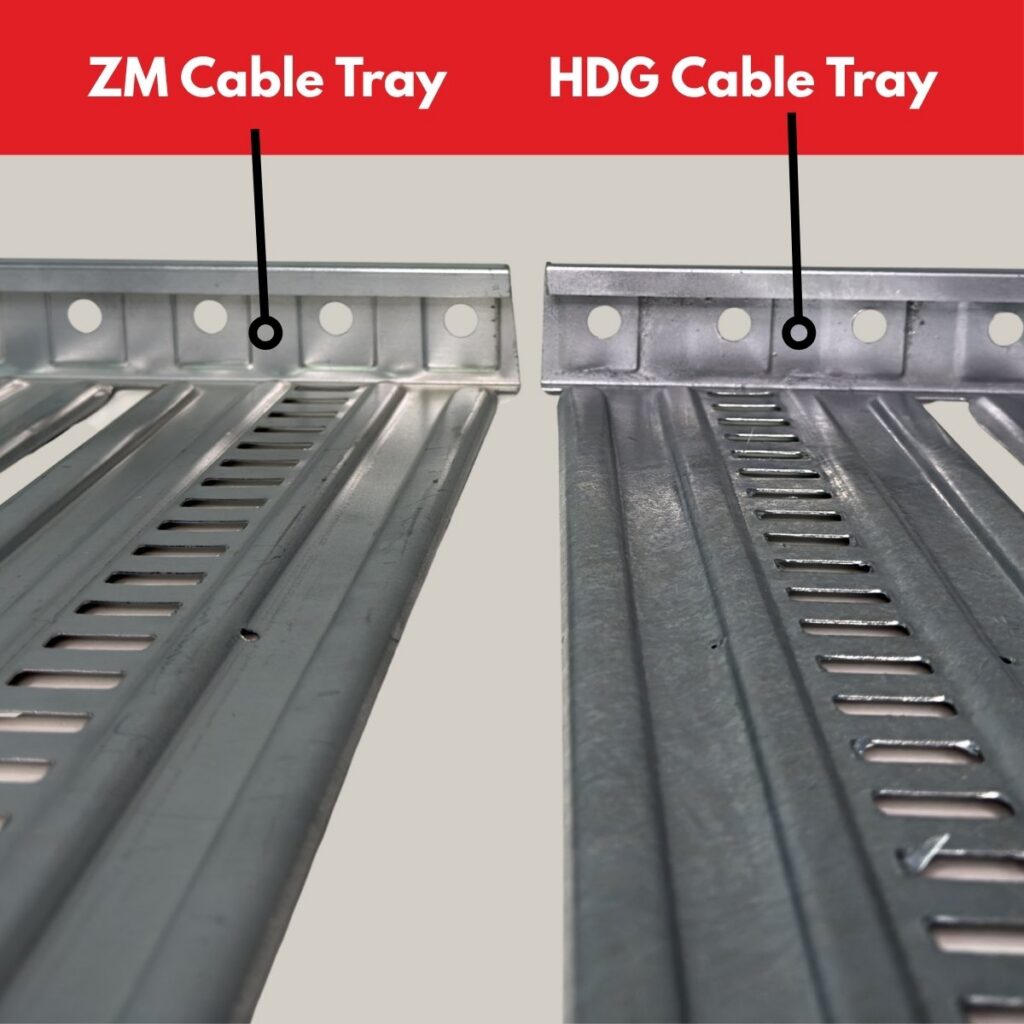
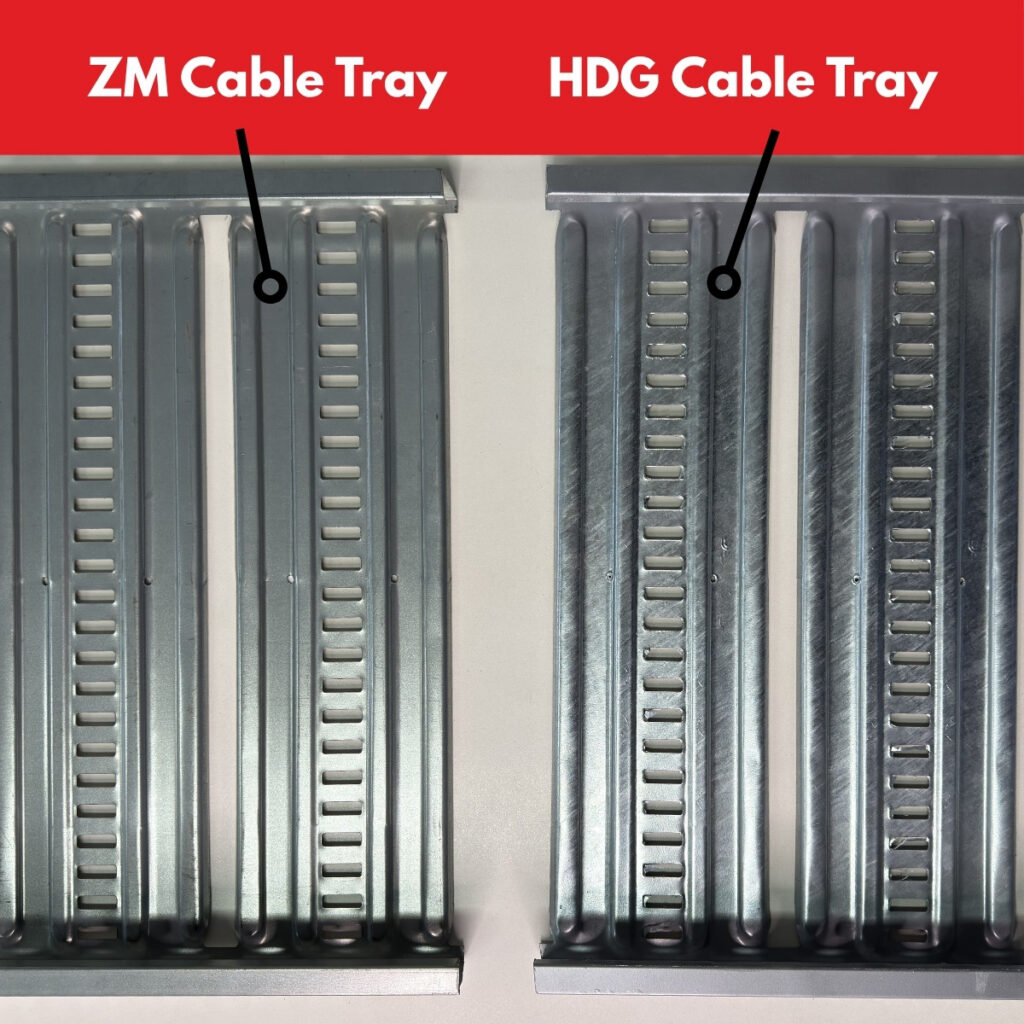
Not only does the magnesium coating perform better in corrosion resaistance, it is also has a reduced lifecycle cost than hot dipped galvanised cable trays. This is due to:
- Shorter Fabrication Process: ZM coated steel does not require a separate hot dipping process after fabrication, unlike HDG Cable Trays.
- Maintainance: As Zinc Magnesium coated tray have a longer life span in harsh environments, this reduces the frequency of maintainance needed after installations are complete.
- Easier to Manouver: Magnesium is significantly lighter than Zinc. Requiring less resources to move the coated materials in the production and transportation process.
Environmental Benefits
The environmental benefits of Zinc Magnesium coating include:
- Less CO2 emissions: As there is no galvanising involved – CO2 emissions are significantly lowered.
- No re-spraying: When cut or drilled, traditional cable trays need chemical-heavy paint to be reapplied – to stop the rusting process on the exposed steel.
- 100% recyclable: Just like other cable trays, the ZM cable trays are 100% fully recylable.
HDG vs ZM Coating Comparison
Hot Dip Galvanised (HDG) coating has been the construction industry standard for decades due to its high corrosion resistance. Zinc Magnesium coating technology is rapidly emerging as a next-generation alternative, offering better corrosion resistance, self-healing protection, and reduced maintenance — particularly in the extreme Australian climate.
| Feature | Zinc-Magnesium Coating | Hot Dip Galvanised (HDG) Coating |
|---|---|---|
| Corrosion Resistance | Excellent | High |
| Self-Healing Protection | Yes | No |
| Coating Weight | Lighter | Heavier |
| Coastal Performance | Excellent | Good |
| Environmental Impact | Lower | Higher |
| manufacturing Process | Faster | Slower |
| Typical Applications | Harsh Environments | Heavy Industrial |
How Zinc Magnesium Coating Is Changing the Australian Construction Industry?
Exposure to coastal salt air, intense UV conditions, extreme heat, moisture and harsh weather can all accelerate corrosion on hot-dip galvanised steel over time.
As industrial projects push for longer product life, lower maintenance requirements and higher-performing materials, Zinc Magnesium (ZM) coating is quickly emerging as one of the fastest-growing innovations in the Australian construction industry.
Thanks to its superior corrosion resistance and performance in aggressive environments, ZM cable tray is increasingly being specified across applications such as:
- Data centres
- Coastal developments
- Industrial facilities
- Wastewater treatment plants
- Agricultural installations
- Renewable energy projects
With Australian construction standards continuing to move towards more durable and sustainable infrastructure, Zinc Magnesium coating is set to play a major role in the future of corrosion protection technology.
What Others Call Zinc Aluminum Magnesium Coating

As usual in construction, people have many different names for a similar product. The following example is for a Zinc Aluminium Magnesium Coated Cable Tray. If you mean the general product, without mentioning brands and trademarks – you can refer to it as ‘ZM Cable Tray’ (ZM standing for Zinc-Magnesium). However, some brands have their own names for this syle of coated cable tray, including:
- ZAM Coating
- Magnelis
- Atkore Defender
- DuraGal Plus
- UltraGal
While there are slight differences between manufacturer’s coating technologies and formulas (with some using 2-6% of magnesium), these products are generally designed to achieve the same goal — improved corrosion resistance and longer service life compared to traditional galvanised steel systems.
Zinc Magnesium Coating Available in Australia
OzStrut will be supplying Zinc Magnesium Cable Tray in 2026 for commercial and industrial installations that require the best corrosion protection and long-term reliability.
With fast delivery all around Australia, OzStrut provides cable management solutions for the construction industry.

For more information on Zinc Magnesium Cable Tray (comming soon!), contact OzStrut:
Phone: (02) 9620 9999
Email: sales@ozstrut.com.au
Website: www.ozstrut.com.au
📍 Head Office: 32 Bearing Rd, Seven Hills NSW 2147
ZM Coating Summary
With advanced corrosion resistance, self-healing protection and outstanding durability in harsh Australian conditions, Zinc Magnesium coating is the next generation of protection for commercial and industrial construction.
To find out more about ZM Coated Cable Tray, contact OzStrut below:
Request a quote on Zinc Magnesium Cable Tray – Coming Soon!
