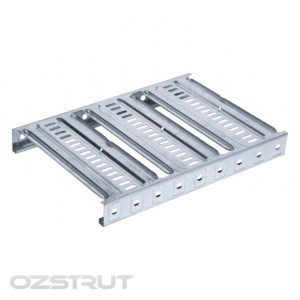
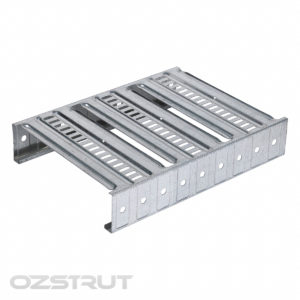
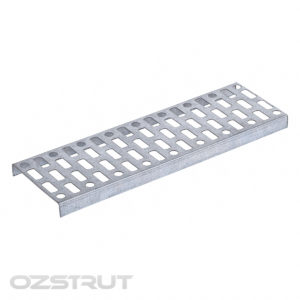
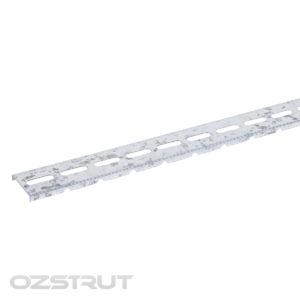
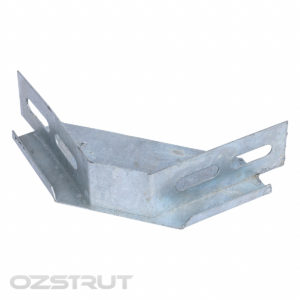
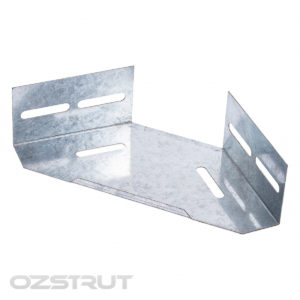
Cable Tray Divider Strip
The Cable Tray Divider Strip provides a practical way to separate different cable groups and services within the same cable tray run. Installed inside the tray, it creates a physical barrier between sections to help keep cabling organised and maintain clear separation throughout the installation.
Supplied in 3 metre lengths, the divider is suited to commercial and industrial cable management systems where multiple cable groups need to share the same tray.
Cable Segregation Within a Single Tray
Using a Cable Tray Divider Strip allows installers to create defined sections within a cable tray rather than running separate trays solely for different cable groups.
Depending on the requirements of the installation, a divider can be used to separate power, control, communications or other services. This can help maintain an organised cable layout and make individual groups easier to identify and manage.
The required separation between different cable types should always be determined by the applicable project, installation and electrical requirements.
Features and Benefits
- Supplied in 3 metre lengths
- Creates separate sections within cable tray
- Provides a physical barrier between cable groups
- Helps organise different services along the same tray run
- Allows efficient use of available cable tray space
- Suitable for commercial and industrial installations
- Simple solution for cable segregation and organisation
Cable Tray Barrier Strip and Divider Terminology
This product may also be referred to as a Cable Tray Barrier Strip, Cable Divider Strip, Cable Tray Divider, Cable Segregation Strip, Divider Strip or Cable Tray Separator.
These terms generally describe the same function: creating a defined barrier inside the cable tray to separate and organise different cable groups.
Typical Applications
Divider strips are suitable for cable management installations where more than one group of cables or services is carried within the same tray.
Typical applications include:
- Commercial electrical installations
- Industrial facilities
- Plant rooms and service areas
- Power and control cable routing
- Communications and data cabling
- Multi-service cable tray runs
- Installations requiring organised cable separation
The divider provides a straightforward way to make better use of a cable tray while keeping individual cable groups clearly separated.
Cable Tray Divider Strip FAQs
Find answers to common questions about divider strips, cable segregation and separating services within cable tray systems.
What is a Cable Tray Divider Strip?
A divider strip is a metal barrier installed inside a cable tray to create separate sections for different cable groups or services. It provides a practical way to organise and segregate cables while continuing to use the same cable tray run.
What is a cable tray divider used for?
A Cable Tray Divider is used to separate different groups of cables within the same tray. Depending on the installation requirements, this may include power, control, communications or other services that need to be organised into separate sections.
Is a Cable Tray Divider Strip the same as a barrier strip?
Yes. This type of product is also commonly referred to as a Cable Tray Barrier Strip, Cable Divider Strip, Cable Segregation Strip, Divider Strip or Cable Tray Separator. The terminology varies, but each refers to a divider used to create separate cable sections within a tray.
What length are the divider strips?
Ozstrut divider strips are supplied in 3 metre lengths, allowing continuous separation along cable tray runs.
Why use a divider instead of separate cable trays?
Where suitable for the installation, a divider allows multiple cable groups to be organised within one cable tray. This can make more efficient use of the available tray space while maintaining clearly defined sections between services.
Can divider strips be used for cable segregation?
Yes. Divider strips can provide a physical barrier between cable groups as part of a cable segregation arrangement. The required separation and suitability should be determined according to the specific cables, services and project requirements.